Evaluating the 8 Face Side Angled Box for Custom Packaging Projects
In the realm of custom packaging and paper crafting, selecting the right structural design is as critical as choosing the material. The 8 Face Side Angled Box, often referred to as a Diamond Shape box due to its geometric profile, represents a sophisticated option for creators seeking distinctiveness. Unlike standard cubic or rectangular containers, this design features eight distinct facets that converge to create a multifaceted, gem-like appearance. For individuals researching packaging solutions, understanding the nuances of this specific template is essential for determining whether it aligns with their project goals, whether for retail products, event favors, or artistic displays.
Understanding the Structure and Design
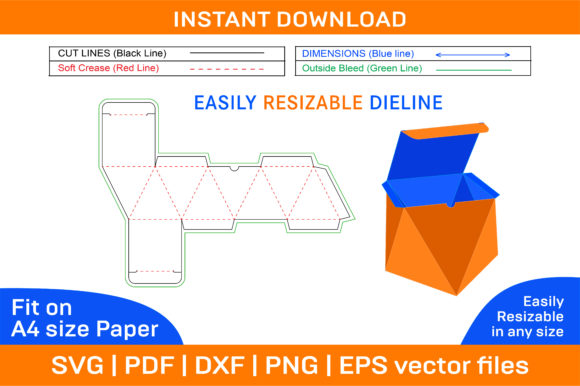
The defining characteristic of the 8 Face Side Angled Box is its complex geometry. While a traditional folding box typically consists of four vertical sides and a top and bottom, this diamond-shaped variant introduces additional angles. The structure generally comprises a series of trapezoidal or triangular panels that fold inward and outward to create depth and visual interest. This results in a container that catches light differently from various viewpoints, mimicking the cut of a polished stone.
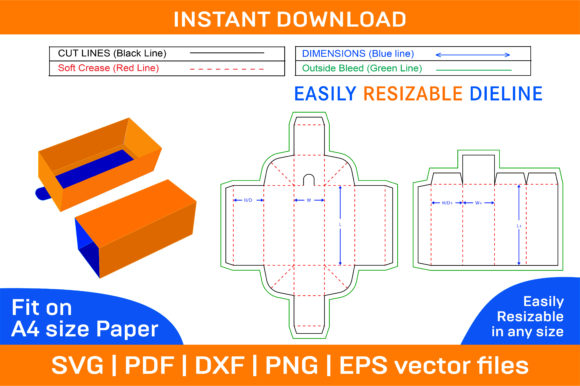
When evaluating a 3D box template of this nature, it is important to recognize that the complexity of the fold lines directly impacts the assembly process. The template usually includes precise score lines and glue tabs designed to interlock or adhere securely. Because the design relies on angular precision, the quality of the vector files provided in the archive—such as SVG, PDF, EPS, DXF, and AI formats—is paramount. These vector-based files ensure that the dimensions remain accurate regardless of scaling, allowing the user to resize the foldable box from a small jewelry case to a larger gift container without losing structural integrity.
Practical Applications and Use Cases
There are several scenarios where the 8 Face Side Angled Box serves as a strong fit. Its primary advantage lies in its aesthetic appeal, making it ideal for products where presentation enhances perceived value. Jewelers, artisanal soap makers, and boutique confectioners often utilize this shape to differentiate their branding from competitors using standard square boxes. The diamond silhouette naturally draws the eye, suggesting luxury and careful craftsmanship.
Furthermore, this design is highly effective for event favors, such as wedding confetti boxes or party gifts. The unique shape acts as a decorative element in itself, potentially reducing the need for excessive external wrapping or ribbons. For hobbyists using cutting machines like Silhouette Studio or Cricut Design Space, the availability of compatible file formats (including DXF and SVG) streamlines the production process. Users can import the printable box template directly into their software, adjust the size to fit specific A4 or custom paper dimensions, and proceed immediately to cutting and scoring.
Benefits of Using Vector-Based Templates
A significant benefit of utilizing a professional template archive for this type of box is the versatility offered by vector graphics. Unlike raster images, which pixelate when enlarged, the SVG, EPS, and AI files included in such archives maintain high-resolution quality at any scale. This is particularly important for a geometric design like the diamond box, where jagged edges or misaligned score lines can compromise the final assembly. The ability to print on any size of paper while maintaining crisp lines ensures that the folds are clean and the final paper box looks professional.
Additionally, the inclusion of both color and blank templates provides flexibility for different workflow preferences. A designer with a specific brand palette may prefer the blank template to apply custom colors and images in software like Photoshop or Illustrator. Conversely, a user looking for a quick solution might utilize the pre-colored version, printing it directly onto white cardstock. The high-resolution 300 DPI specification ensures that any printed graphics or textures appear sharp and free of artifacts.
Considerations and Tradeoffs
While the 8 Face Side Angled Box offers distinct visual advantages, there are tradeoffs to consider during the selection process. The primary consideration is the complexity of assembly compared to simpler designs. A standard tuck-top box requires minimal folding and no adhesive in many cases. In contrast, the diamond shape often requires precise gluing of multiple tabs to maintain its structural rigidity. For high-volume production runs, this increased assembly time could be a bottleneck unless automated gluing equipment is available.
Material selection is another critical factor. Due to the multiple angles and fold lines, the choice of paper stock influences the final outcome significantly. Heavyweight cardstock provides the necessary rigidity to hold the diamond shape but can be difficult to fold cleanly without a dedicated scoring tool. Lighter paper may result in a box that collapses or loses its defined facets under the weight of its contents. Therefore, users must balance the desire for a sturdy container with the practical limitations of their chosen material.
Another potential limitation is internal volume efficiency. Because the sides angle inward or outward to create the faceted look, the internal cubic capacity may differ from a standard rectangular box of similar external dimensions. If the goal is to maximize storage space or fit a specific rectangular product snugly, the irregular interior of the diamond box might require custom inserts or padding. Users should evaluate the dimensions of their product against the internal geometry of the template before committing to a large print run.
Decision-Making Insights for Creators
When deciding whether to proceed with the 8 Face Side Angled Box, creators should ask themselves three key questions regarding their project requirements. First, is the visual impact of the packaging a primary selling point? If the answer is yes, the unique geometry justifies the extra effort in assembly. Second, does the production workflow support multi-step folding and gluing? For small batches or handmade items, this is rarely an issue, but mass production may require a cost-benefit analysis of labor time. Third, is the product lightweight? Given the structural nuances, these boxes are often best suited for lighter items unless reinforced with thick board.
Alternatives may be worth considering if simplicity and speed are the highest priorities. A standard cube or rectangular prism template offers faster assembly and more efficient use of sheet material, reducing waste. However, for projects where differentiation and premium presentation are the goals, the diamond shape remains a superior choice. The availability of instant download files in diverse formats ensures that users can test the design with minimal risk, printing a single prototype on A4 paper to verify fit and finish before scaling up.
Final Thoughts on Implementation
The 8 Face Side Angled Box represents a convergence of geometric artistry and functional packaging. By leveraging high-quality vector templates compatible with industry-standard software, creators can produce custom objects that stand out in a crowded market. Whether used for commercial retail packaging or personal craft projects, the success of this design relies on careful attention to material selection, precise scoring, and patient assembly. For those willing to invest the time in mastering the folds, the result is a distinctive, professional-grade container that elevates the unboxing experience.