Strategic Packaging Design: Leveraging the Jewelry Cardboard Gift Box, Drawer Style for Brand Elevation
In the competitive landscape of retail and e-commerce, the unboxing experience has evolved from a mere logistical necessity into a critical touchpoint of brand communication. For entrepreneurs, marketers, and small business owners, the choice of packaging is not simply about containment; it is a strategic decision that influences perceived value, customer loyalty, and operational efficiency. Among the various structural options available, the Jewelry Cardboard Gift Box, Drawer Style stands out as a particularly effective solution for brands aiming to balance sophistication with practicality. This specific format offers a tactile interaction that flat boxes or simple pouches cannot replicate, creating a moment of anticipation that enhances the overall customer journey.
Understanding the utility of a Jewelry cardboard gift box, Drawer style requires looking beyond its aesthetic appeal. Strategically, this design serves as a physical manifestation of your brand's attention to detail. When a customer slides open a drawer-style box, the mechanical action itself suggests quality and durability. It transforms the act of revealing a product into a ritual. For businesses selling high-margin items like jewelry, watches, or premium accessories, this structural choice supports positioning goals by signaling that the contents are valuable and worthy of protection. It is a subtle yet powerful psychological cue that justifies price points and reinforces brand identity before the product is even touched.
Operational Flexibility and Customization Potential
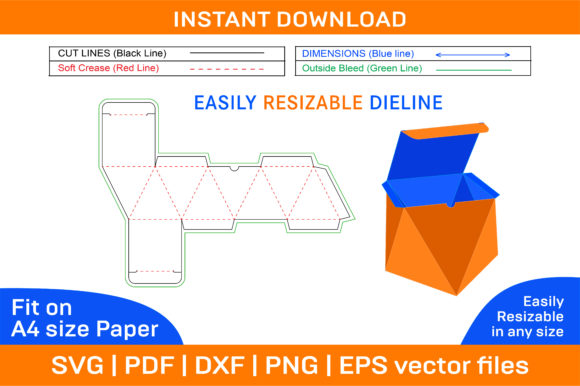
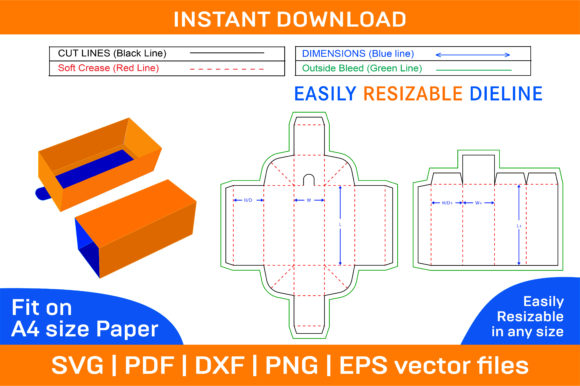
One of the most significant advantages of adopting a drawer-style structure is the flexibility it offers in production and customization. Whether you are a hobbyist launching a side hustle or an established enterprise scaling operations, the ability to control your packaging assets is vital. The availability of a comprehensive Jewelry cardboard gift box, Drawer style sleeve box dieline template empowers creators to move away from generic, off-the-shelf solutions that dilute brand distinctiveness. By utilizing a vector-based template, you gain the freedom to tailor every aspect of the box to your specific thematic requirements.
The technical specifications of these templates are designed to support professional outcomes. A robust package typically includes a ZIP archive containing SVG, PDF, EPS, DXF, AI, and PNG files. This diversity in file formats ensures compatibility across a wide range of software ecosystems. Graphic designers working in Adobe Illustrator or Photoshop can manipulate the AI and PSD layers for complex print-ready artwork, while crafters using Silhouette Studio or Cricut Design Space can leverage the SVG and DXF files for precise cutting and scoring. Even engineers or architects needing to integrate packaging dimensions into larger product designs can utilize the CAD-compatible DXF files. This interoperability removes technical barriers, allowing teams to focus on creative execution rather than file conversion struggles.
Furthermore, the inclusion of both color templates and blank templates within the archive provides strategic versatility. The color template serves as a visual guide for assembly and design alignment, ensuring that folds and glue tabs are placed correctly. Conversely, the blank template acts as a canvas for unlimited creativity. You can print these on any color paper stock that matches your brand palette, from kraft brown for an eco-friendly narrative to glossy black for a luxury feel. Because the files are vector-based, they maintain high-resolution quality at any scale. While optimized for standard A4 paper, the vector nature means you can resize the Jewelry cardboard gift box, Drawer style dimensions without losing line integrity, accommodating products of varying sizes without needing to commission new tooling.
Strategic Implementation and Decision-Making
Integrating a custom drawer box into your supply chain should be a deliberate decision driven by clear goals. It is not merely about having a "pretty box"; it is about solving specific business challenges. For instance, if your goal is to reduce return rates caused by damaged goods, the rigid structure of a drawer box offers superior protection compared to flexible mailers. If your objective is to increase social media shares, the unique opening mechanism of a drawer box encourages users to film the unboxing process, generating organic user-generated content (UGC).
However, relying on this packaging style without a coherent strategy can lead to inefficiencies. A common pitfall is over-engineering the design without considering the labor required for assembly. While the foldable box design is intuitive, high-volume operations must calculate the time cost of folding and gluing versus the brand equity gained. For small batches or limited editions, the manual assembly adds a "hand-crafted" value proposition that resonates with consumers. For mass production, you might consider pre-glued versions or automated folding machinery. The key is to align the complexity of the paper box with your operational capacity.
Planning is also essential when utilizing printable box templates. Since these files are often intended for instant download and immediate use, there is a temptation to rush the design phase. To avoid this, adopt a phased approach:
- Prototype First: Print the blank template on standard cardstock to test the fit and fold mechanics before committing to expensive specialty papers.
- Material Selection: Choose a paper weight that complements the drawer mechanism. Too thin, and the drawer will feel flimsy; too thick, and it may not slide smoothly within the sleeve.
- Brand Consistency: Ensure that the exterior graphics communicate the same message as the interior. The inside of the drawer is prime real estate for reinforcing brand values or including a thank-you note.
Risk Mitigation and Long-Term Value
Using a Jewelry cardboard gift box, Drawer style without clear context can introduce risks. One such risk is the disconnect between packaging promise and product reality. If the box exudes ultra-luxury but the product inside feels cheap, the dissonance can damage trust more than simple packaging would have. Therefore, the packaging must accurately reflect the product tier. Additionally, environmental considerations are increasingly important to modern consumers. While cardboard is generally recyclable, the use of heavy inks, laminates, or non-paper inserts can complicate disposal. A thoughtful strategy involves selecting sustainable inks and minimizing excess material in the dieline design.
From a learning and development perspective, mastering the use of these templates fosters greater autonomy within a team. When marketers and product managers understand the capabilities of vector-based dielines, they can communicate more effectively with manufacturers and designers. This cross-functional literacy reduces errors and speeds up time-to-market. The ability to customize with colors and images of your own theme allows for rapid iteration. You can test different seasonal designs or limited-edition wraps without altering the core structural component, providing agility in response to market trends.
Technical Execution and File Management
The success of your custom packaging project hinges on the quality of the source files. High-resolution outputs at 300 dpi are non-negotiable for professional printing. Blurry edges or pixelated logos on a printable box template immediately degrade the perceived quality of the brand. The vector files included in standard archives ensure that lines remain crisp regardless of the output size. When preparing these files for print, always verify the color mode (CMYK for offset printing, RGB for digital proofing) and bleed settings to avoid white borders on the final cut.
Accessibility and support are also crucial factors. Reputable providers offer instant download capabilities, allowing you to begin work immediately after purchase. However, technical issues can arise—files may not open correctly in older software versions, or specific cut lines might need adjustment for unique die-cutting machines. In such cases, having access to support is vital. A responsive creator who invites contact for problem-solving adds a layer of security to your procurement process, ensuring that your project does not stall due to a corrupted file or compatibility glitch.
Ultimately, the Jewelry cardboard gift box, Drawer style is more than a container; it is a strategic asset. When used intentionally, it supports broader business goals ranging from brand differentiation to customer retention. By leveraging high-quality, versatile dieline templates and approaching the design process with a planner's mindset, businesses can create packaging that not only protects their products but also elevates their entire brand narrative. The transition from generic packaging to a custom, thoughtfully engineered drawer box represents a maturity in business operations—a signal that you value the customer experience enough to invest in the details that others overlook.