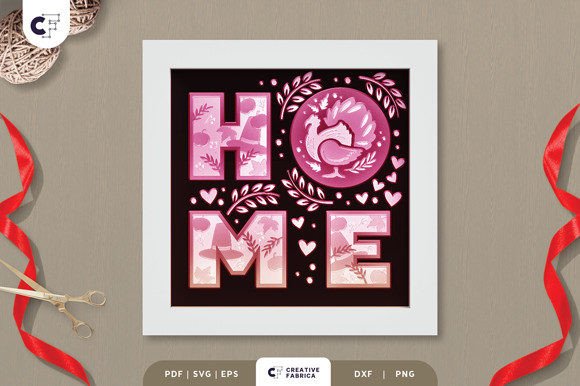
Crafting Depth and Warmth: A Guide to the Thanksgiving HOME 3D Shadow Box
The intersection of traditional holiday sentiment and modern papercrafting technology has given rise to a stunning trend in home decor: the layered shadow box. Among the most popular designs for the autumn season is the Thanksgiving HOME 3D Shadow Box. This project combines the typographic simplicity of the word "HOME" with iconic seasonal imagery, such as turkeys and pumpkins, to create a piece of art that possesses genuine physical depth. For creators ranging from hobbyists to professional interior designers, understanding the mechanics, materials, and potential applications of this layered template offers a pathway to creating unique, handcrafted gifts and decorations.
The Mechanics of Layered Papercutting
At its core, a 3D shadow box relies on the principle of parallax and spacing to create an illusion of three-dimensionality on a two-dimensional surface. The Thanksgiving HOME 3D Shadow Box template typically consists of seven distinct layers. When stacked, these layers separate the foreground elements from the background, allowing light and shadow to play across the cutouts. This technique transforms a flat sheet of paper into a miniature diorama.
The design usually features a square format, often measuring 8×8 inches (20.32×20.32 cm), which provides a compact yet impactful footprint suitable for shelves, mantels, or wall mounting. The central motif, the word "HOME," serves as the structural anchor. Surrounding this text are decorative elements like turkeys and pumpkins, which are distributed across different planes. By isolating specific details on separate layers, the crafter can emphasize texture and form. For instance, the pumpkin might sit slightly forward of the text, while the turkey feathers extend into the negative space, creating a dynamic visual flow that draws the eye inward.
Digital Formats and Cutting Technologies
Modern crafting is heavily reliant on digital precision. The availability of the Thanksgiving HOME 3D Shadow Box in multiple file formats—SVG, PDF, EPS, PNG, and DXF—ensures compatibility with a wide array of tools and skill levels. For those utilizing electronic cutting machines like the Silhouette or Cricut, the SVG and DXF files are indispensable. These vector-based formats allow the machine to read precise cut lines, ensuring that intricate details, such as the veins on a leaf or the texture of a turkey's feather, are rendered perfectly.
However, the accessibility of this project extends beyond machine owners. The inclusion of PDF and PNG formats means that traditional crafters can print the templates and use art knives or scissors to achieve the same result. While manual cutting requires more time and a steady hand, it offers a tactile connection to the material that many artisans prefer. Regardless of the method chosen, the key to success lies in the integrity of the cut. Clean edges are crucial because any fraying or tearing becomes magnified when the layers are stacked and viewed from an angle.
Material Selection and Structural Integrity
The choice of paper is perhaps the most critical variable in the success of a 3D shadow box. The structure must be rigid enough to hold its shape without bowing under its own weight or the tension of assembly, yet thin enough to allow for clean cutting of fine details. Industry standards for this type of project often point toward heavy cover stock. Specifically, Encore Cardstock 80 lb cover (216 gsm) is frequently recommended. This weight provides the necessary stiffness to maintain the gaps between layers without requiring excessive internal supports.
Using cardstock that is too light, such as standard printer paper or 65 lb cover, can result in a flimsy final product where the layers collapse against one another, destroying the 3D effect. Conversely, paper that is too thick may be difficult to cut cleanly, especially for intricate inner details, and can make the folding or gluing process cumbersome. The 80 lb weight strikes an ideal balance, offering durability while remaining workable for both machine and hand cutting.
Color theory also plays a significant role in the visual impact of the shadow box. Since the design relies on shadows cast by the layers, high-contrast color schemes often yield the most dramatic results. A common approach involves using warm autumnal tones—oranges, deep reds, browns, and golds—against a neutral or dark background. Alternatively, a monochromatic scheme using varying shades of a single color can create a sophisticated, subtle depth that highlights the geometry of the cuts rather than the hue.
Assembly Techniques and Adhesives
Assembling a seven-layer design requires patience and precision. The goal is to create uniform spacing between each layer to maximize the shadow effect. Crafters typically use foam adhesive squares, double-sided tape with built-in spacers, or small strips of folded cardstock to separate the layers. Glue sticks are generally discouraged for the spacing elements because they can compress over time, reducing the depth of the box.
When aligning the layers, registration is key. Most digital templates include registration marks or corner guides to help align the sheets perfectly before cutting. During assembly, working on a light table or holding the stack up to a window can help ensure that every layer is positioned exactly as intended. Even a millimeter of misalignment can disrupt the visual continuity of the "HOME" text or the surrounding decorations.
Illumination and Display Options
One of the most transformative ways to display a Thanksgiving HOME 3D Shadow Box is by converting it into a light box. By integrating LED strip lights between the layers, the paper transforms from a static object into a glowing centerpiece. The light filters through the cutouts, casting intricate patterns on the wall behind the box and illuminating the internal layers from within. This technique is particularly effective for evening displays during the holiday season.
To achieve this effect, crafters can insert battery-operated LED fairy lights or flexible LED strips between specific layers, usually towards the back of the stack. It is essential to ensure that the wiring is concealed and that the heat output of the lights is minimal to prevent damage to the paper. When designing for illumination, the choice of paper color becomes even more critical; lighter colors will transmit more light, creating a soft glow, while darker colors will create sharp, defined silhouettes.
For those who prefer a traditional framed look, the assembled stack can be placed inside a deep-set frame or a dedicated shadow box frame. The 8×8 inch size is standard enough to fit into many pre-made frames available at craft stores. Framing not only protects the delicate paper layers from dust and humidity but also provides a finished, professional edge that enhances the artwork's presence on a wall or shelf.
Versatility in Application and Gifting
The utility of the Thanksgiving HOME 3D Shadow Box extends far beyond personal home decoration. Its scalable nature and universal theme make it an excellent candidate for various real-world applications. Educators can use the project to teach students about geometry, layering, and cultural traditions surrounding Thanksgiving. The process of assembling seven distinct layers offers a practical lesson in spatial reasoning and fine motor skills.
For small business owners and Etsy sellers, this design represents a viable product opportunity. Handmade, personalized decor is in high demand during the holiday season. Because the SVG files can be resized while maintaining the aspect ratio, creators can adapt the design to different dimensions, offering custom sizes to clients. Furthermore, the ability to customize the color palette allows for bespoke orders that match a customer's existing interior design scheme.
As a gift, the shadow box carries a profound emotional weight. The word "HOME" resonates deeply, symbolizing family, safety, and belonging. Presenting a hand-assembled shadow box to a friend, family member, or host conveys a level of thoughtfulness that mass-produced items cannot match. Whether given as a housewarming present, a hostess gift for a Thanksgiving dinner, or a keepsake for a loved one, the tangible effort involved in cutting and assembling seven layers of cardstock adds significant sentimental value.
Considerations for Scaling and Modification
While the standard template is designed for an 8×8 inch format, the vector nature of the SVG and EPS files allows for significant flexibility. Users can scale the design up for a large statement piece or down for a smaller ornament or card insertion. However, it is vital to maintain the aspect ratio during resizing to prevent distortion of the text and images. Stretching the design horizontally or vertically will ruin the proportions of the turkey and pumpkin motifs.
Advanced crafters may also choose to modify the design itself. With editing software, one can add additional layers, change the font of the "HOME" text, or incorporate family names and dates into the background layers. This customization turns a standard template into a unique heirloom. However, any modification should be tested with a single prototype layer before committing to cutting all seven layers, ensuring that the structural balance of the design remains intact.
In conclusion, the Thanksgiving HOME 3D Shadow Box exemplifies the potential of modern digital crafting to produce traditional, heartfelt art. By combining precise digital templates with high-quality materials like 80 lb cardstock and thoughtful assembly techniques, creators can produce works that capture the essence of the season. Whether illuminated as a lantern or framed as a wall hanging, these layered compositions offer a versatile and meaningful way to celebrate Thanksgiving and the concept of home.