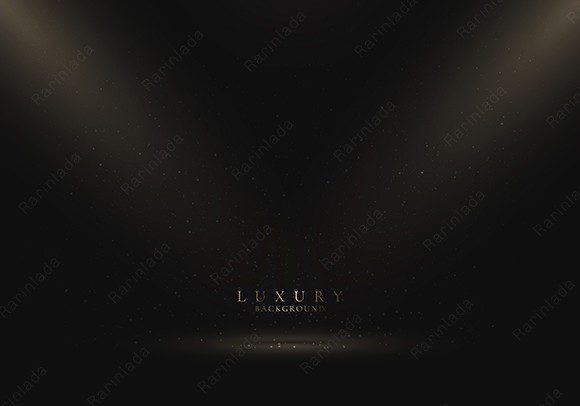
Elevating Visual Storytelling with a 3D Luxury Empty Black Studio Room
In the rapidly evolving landscape of digital content creation, the environment in which a product or idea is presented often speaks as loudly as the subject itself. A 3D Luxury Empty Black Studio Room has emerged as a cornerstone asset for professionals seeking to convey sophistication, focus, and high-end quality. This specific aesthetic—a void of deep, rich black illuminated by strategic lighting—offers a versatile canvas that adapts seamlessly to various creative needs, from e-commerce photography to architectural visualization.
The appeal of this style lies in its ability to eliminate distraction. By removing background clutter and utilizing a monochromatic, luxurious palette, creators force the viewer's eye to rest solely on the focal point. Whether it is a sleek smartphone, a piece of fine jewelry, or an abstract concept, the black studio setting provides a stage where light and shadow play a critical role in defining form and texture. This approach aligns perfectly with modern consumer expectations, where clarity and premium presentation are non-negotiable standards.
The Evolution of Minimalist Digital Stages
The shift toward using empty black studio environments is not merely a fleeting design trend; it represents a fundamental change in how we consume visual information. In the past, busy backgrounds and complex sets were often used to create context. Today, however, information overload has led to a preference for minimalism. Users scroll through feeds at incredible speeds, and their brains are trained to filter out noise. A 3D empty black studio room with spotlight and scattered dust particles on show stage cuts through this noise effectively.
This evolution mirrors broader changes in luxury branding and user interface design. Just as websites have moved toward clean lines and ample white (or dark) space, product photography and 3D rendering have embraced the "less is more" philosophy. The inclusion of subtle elements, such as scattered dust particles caught in a beam of light, adds a layer of realism and atmosphere without compromising the minimalist ethos. These particles suggest a lived-in space or a moment frozen in time, adding emotional depth to an otherwise sterile environment.
Furthermore, the transition from physical photography sets to 3D rendered environments reflects a practical shift in workflow. Physical studios require significant investment in space, lighting equipment, and maintenance. They are also limited by physics and location. In contrast, a digital 3D studio offers infinite flexibility. Lighting angles can be adjusted instantly, colors can be tweaked without repainting walls, and the "room" can be duplicated endlessly for different projects. This efficiency is crucial for businesses and freelancers who need to produce high volumes of content without sacrificing quality.
Technical Precision: The Power of Vector Illustration
While many 3D renders are delivered as raster images (pixels), the availability of these studio environments as 100% vector illustrations marks a significant advantage for professional workflows. Vector graphics are defined by mathematical paths rather than a grid of pixels, meaning they can be scaled to any size without losing clarity. This is particularly relevant for large-format printing, such as billboards, trade show banners, or high-resolution magazine spreads, where pixelation would be unacceptable.
The specification of high resolution 300 dpi combined with vector scalability ensures that every detail, from the gradient of the black floor to the sharpness of the spotlight edge, remains crisp. For creators using software like Adobe Illustrator or Corel Draw, this format offers unparalleled control. Every element within the scene—the floor, the walls, the light beams, and even the dust particles—can be individually selected, modified, or recolored. This level of editability transforms a static image into a dynamic toolkit.
Consider a marketer who needs to adapt a campaign for different brand colors. With a fully editable vector file, changing the hue of a spotlight or the tone of the ambient reflection takes seconds rather than requiring a re-render or a complex Photoshop session. The file formats typically included, such as EPS Version 10 and high-quality JPG previews, ensure compatibility across a wide range of design platforms. EPS Version 10 is a robust standard that maintains compatibility with older software versions while supporting modern features, making it a safe choice for agencies with diverse tech stacks.
Practical Applications Across Industries
The utility of a luxury black studio room extends far beyond traditional photography. Its applications are diverse, catering to a wide array of industries and creative disciplines:
- E-Commerce and Product Launches: High-end electronics, cosmetics, and automotive brands frequently use black studio settings to highlight product contours. The contrast makes metallic finishes pop and allows transparent materials, like glass bottles, to be clearly defined against the dark background.
- Digital Marketing and Social Media: In a crowded social media feed, a post featuring a dramatic, spotlighted product on a black stage commands attention. The aesthetic signals premium quality, helping brands justify higher price points and attract discerning customers.
- Architectural and Interior Design: Architects use these empty rooms as templates to showcase furniture placements or lighting concepts. The "empty" nature of the room allows them to insert their own 3D models without worrying about clashing backgrounds.
- Event Visualization: Event planners can utilize the show stage variant to mockup concert setups, award ceremonies, or fashion shows. The scattered dust particles add a theatrical element, simulating the atmosphere of a live event under heavy stage lighting.
- Educational Content: Educators and tutorial creators can use these neutral backgrounds to overlay text, diagrams, or annotations without visual interference, ensuring that the learning material remains the primary focus.
Adapting to Modern Creative Workflows
The demand for assets like the 3D Luxury Empty Black Studio Room is driven by the need for speed and consistency in modern creative workflows. Freelancers and small business owners often wear multiple hats, acting as photographer, designer, and marketer simultaneously. Having access to a pre-made, high-quality environment eliminates the need to build a scene from scratch. This allows them to focus their energy on the core message of their project rather than the technicalities of setting up a virtual camera.
Moreover, the "no watermark" policy associated with premium files is essential for professional use. Watermarked images restrict composition and can degrade the final output, making them unsuitable for client work. Receiving a clean, fully editable file empowers creators to deliver polished results that meet industry standards. The ability to manipulate the vector nodes means that the perspective of the room can be slightly altered, or the intensity of the spotlight can be exaggerated to suit specific artistic directions.
It is also worth noting the psychological impact of the black studio aesthetic. In color psychology, black is often associated with authority, elegance, and mystery. When used in a luxury context, it creates a sense of exclusivity. For businesses trying to position themselves as market leaders, adopting this visual language can subtly influence customer perception. It suggests that the brand is confident enough to let its products stand alone in the dark, relying on their inherent quality to shine.
Future-Proofing Your Visual Assets
As technology advances, the line between 3D rendering and reality continues to blur. Technologies like ray tracing and global illumination have made digital lights behave almost exactly like real-world photons. However, the foundational need for a well-composed stage remains constant. Investing in high-quality vector-based 3D assets is a future-proof strategy. Unlike raster images that may become obsolete as screen resolutions increase (e.g., moving from 4K to 8K displays), vector graphics remain infinitely sharp.
For those looking to integrate these assets into their workflow, the recommendation is to organize files logically. Since the package includes both EPS and JPG formats, use the JPG for quick previews and layout planning, and switch to the EPS for final production. Take advantage of the layers within the vector file; isolate the dust particles to adjust their opacity independently from the spotlight, or group the floor and walls to apply a global texture change.
In conclusion, the 3D empty black studio room with spotlight and scattered dust particles is more than just a background image. It is a sophisticated tool that addresses the modern need for clarity, luxury, and efficiency. By leveraging the power of 100% vector illustration, creators can ensure their work stands out in a saturated market, delivering visuals that are not only beautiful but technically superior. Whether you are a seasoned graphic designer or a business owner looking to elevate your brand presence, understanding and utilizing these digital environments is a strategic move toward professional excellence.